
Where a Warren County Resident Lookup Starts
Warren County publishes no official all-residents list. A sound resident lookup leans on the record that fits the question. The question is what you are actually asking. The Warren County Auditor Property Search ties an assessed owner to a parcel. It also gives a situs address, a legal description, and other assessment fields. The parcel number then bridges naturally to the Recorder. That trail proves a property connection, nothing more. An owner, a tax-mailing contact, a situs address, and an occupant remain separate facts. Property can sit vacant. It can sit inside a trust, or carry an owner mailing address far outside the county.
| Record route | Question it can answer | Warren County keeper | Access channel |
|---|---|---|---|
| Auditor parcel card | Recorded assessment owner and parcel context | Auditor Property Search | Online name, address, parcel, account, lot, or advanced route |
| Voter registration | Limited current registration question | Board of Elections | Online name lookup, report creator, or Board request |
| Common Pleas case | Named civil, criminal, or domestic case context | Clerk of Courts | Case Inquiry, public terminal, counter, or clerk request |
| Probate or vital record | Estate, marriage, or a certified event record | Probate Court or Health District | Separate portal, counter, phone, mail, or order route |
| Historic county record | Older county material and archival leads | Records Center & Archives | Index, request, reading room, or creating department |
Anchor the search narrowly. A known parcel belongs with the Auditor and Recorder. A known court reference belongs with the court holding jurisdiction. A family-history date might point to Probate. It might also point to the Records Center, the Warren County Genealogical Society, or the Health District. Keep the source date, exact spelling, and record number in a note. That habit makes later comparison possible without blurring similar names into one.
Warren County Court Record Matches
The Common Pleas Case Inquiry handles Civil, Criminal, and Domestic Relations matters. It does not cover every Warren County case. County Court, municipal courts, mayor courts, Probate and Juvenile, and federal courts each run separate routes. Check the county court jurisdiction guide before running a name search. An empty Common Pleas result cannot rule out a case sitting in one of those other systems.
| Common Pleas search field | How it narrows a result |
|---|---|
| Party Name | Primary name route; review same-name matches carefully. |
| Case Number | The more exact alternative when a reference is known. |
| Case Type | Optional narrowing for Civil, Criminal, or Domestic Relations. |
| Plaintiff or Defendant | Role-specific route where the inquiry supplies it. |
A hit should come back with a caption and a case or reference number. Record the case type and party role too. Note the displayed dates. A docket is just the court's running log of procedural events. It is not a verdict on everyone named. The public inquiry carries detailed case history for filings from May 1991 forward. Between 1980 and May 1991, it shows only a caption and case or reference number. Filed-document images are not published there. The Clerk counter is one documented next channel. A public terminal and possible off-site retrieval are others. All are subject to seals and other restrictions.
The Clerk sits at 500 Justice Drive in Lebanon. It posts copy options ranging from ordinary to certified, authenticated, and electronic. A focused request should give the reference number and party names. Include the approximate filing year and the record type wanted. For another court, route the request by incident location and case type. Avoid blasting a broad name request across every docket.
The PACER federal court system covers Southern District of Ohio federal cases as a separate source. Its account, fee, and sealed-case limits mean it never substitutes for Warren County court inquiry.
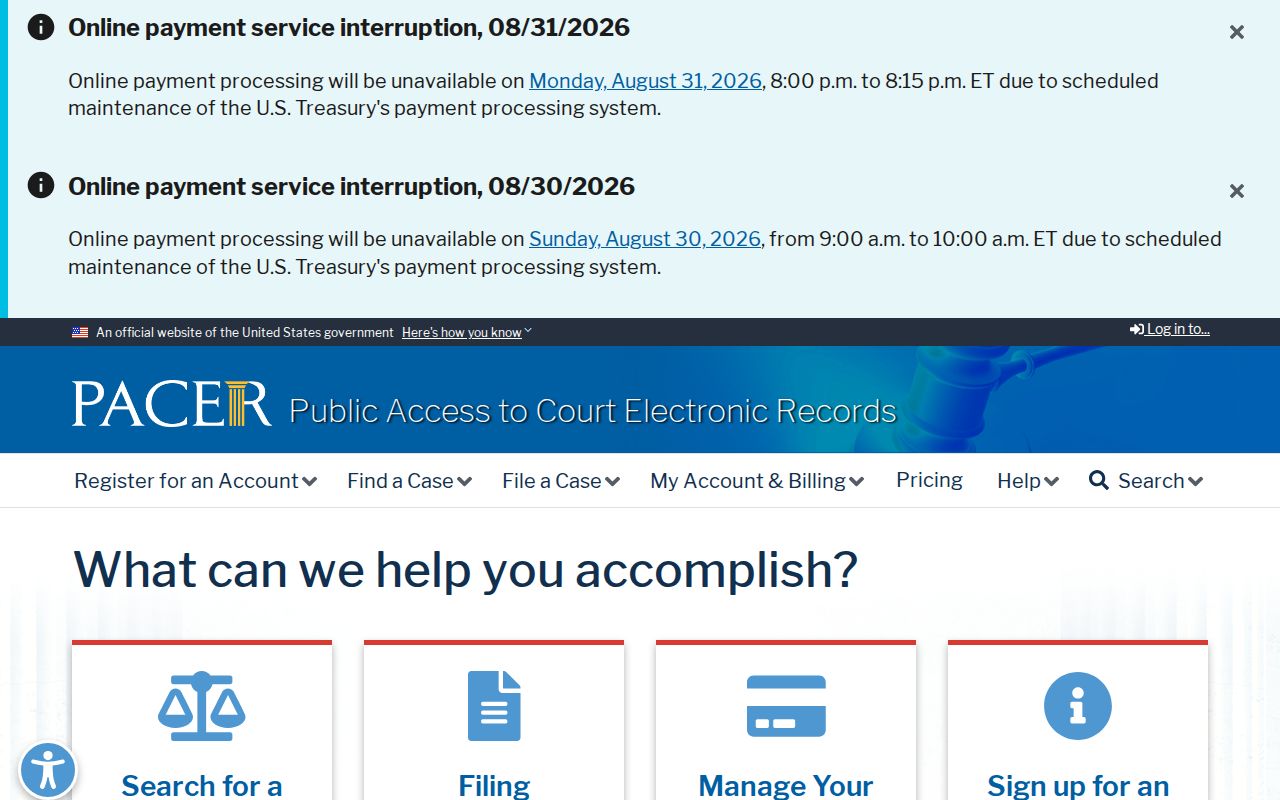
Keep federal and county court records in separate dated notes. PACER is the official federal route. A Warren County case still needs the right local court or Clerk channel.
Warren County Voter Registration Checks
The Warren Voter Information Search requires a last name. It takes a first name as a refiner. It reports daily updates and sends people to the Board when a voter does not appear. That makes it a limited registration check. It cannot identify every member of a household or prove present physical occupancy. Registration shifts through address updates, cancellations, confirmation processes, and precinct adjustments.
Ohio Revised Code sections 3503.13 and 3503.153 govern what voter information becomes public. They also govern what goes online. The statutes exclude protected identifiers such as Social Security, driver or state-ID, phone, and email data. They also shield Safe at Home and other confidential registrations. A visible result holds limited administrative data: current residence, precinct, registration date, voting history, and last activity as statute allows. Voting history means participation by election, never ballot choices.
The Board's report creator offers report families including district, election, party, household, and street-range reports. Availability, format, fee, and permitted use all vary. To request one, name the report type and election or date range. Also give the geography, format, and contact information. The Board may manage copying around elections, and it will not hand over protected information.
The Board of Elections report page is an official reporting route for these requests.
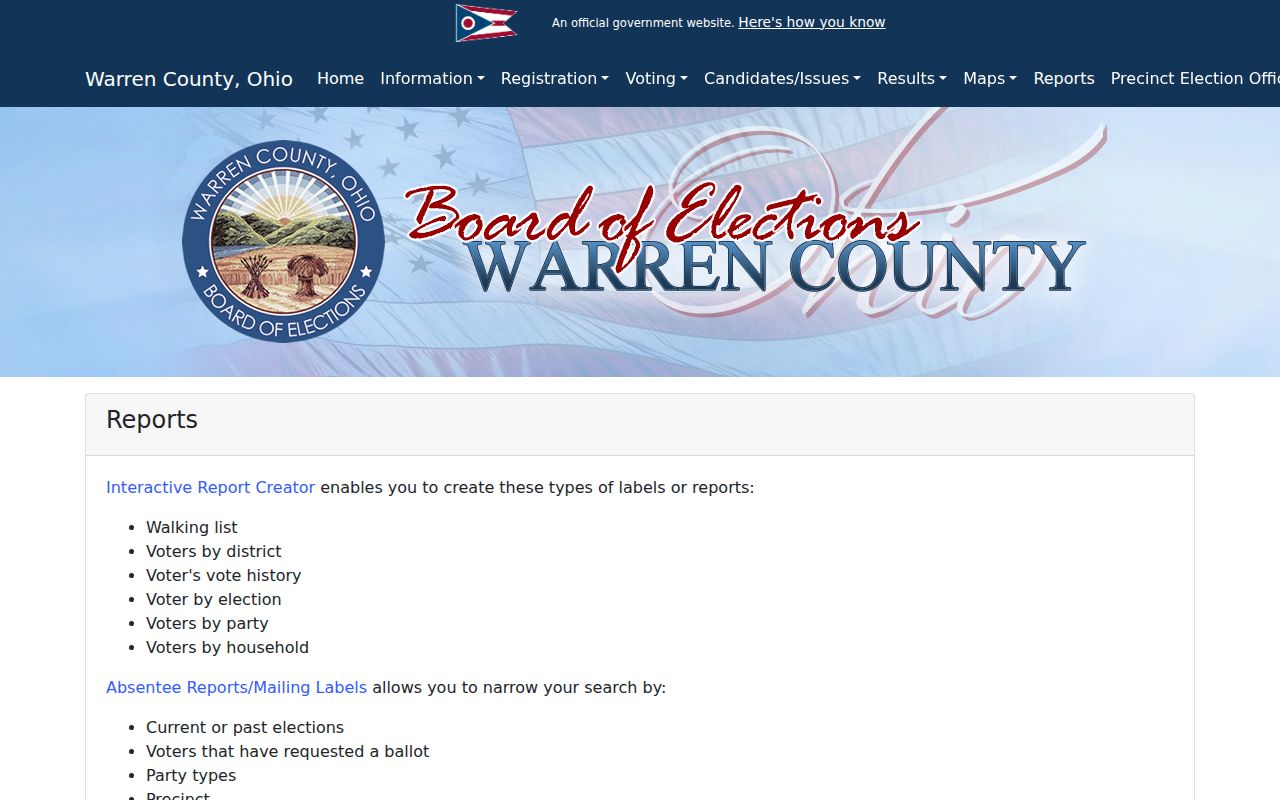
Its report labels help a requester frame one narrow administrative question rather than build a household profile.
Confirming a Warren County Resident Lookup
A reliable match is a short timeline of primary sources, not a confidence score. Start with the least sensitive fact you know. Compare exact name, middle initial or suffix, date, locality, source type, and the relationship each record actually states. Warren County's postal labels, townships, and municipalities can describe different geographic facts. Keep an old address as printed. That changes only if a dated map or official record supports a modern correlation.
- Search the Auditor by known address or recorded owner name, then confirm the returned situs address and parcel number.
- Use the 10-digit parcel number in the Recorder's AVA land-record search to examine the dated instrument, named parties, and legal description.
- For a court lead, select the right jurisdiction and compare the case caption and dates with an independent address, parcel, or historic event.
- For an older family question, compare Probate, newspaper, census, or Records Center material and mark any remaining result as a possible match.
- Docket
- A court's chronological record of procedural activity in a case. It is not the full case file.
- Index and image
- An index points to a record. An image is the document itself, and an online index hit does not ensure its image is available.
- Certified copy
- A custodian-issued copy with certification for a use that requires official certification, distinct from a research note or ordinary printout.
Narrow labels matter here. The Auditor documents who owns a parcel. The Recorder documents what a deed says. Yet neither office can prove who actually lived at a Warren County address. A dated household lead can still surface. The Warren County city directory page describes the historic collections that hold such leads. Treat any lead as a starting point. Compare it source by source before calling it settled.
Warren County Probate and Vital Routes
Probate Court is the estate and family-record route. Its search takes one item at a time. Enter a name or company in last, first middle format, a case number using digits only, or a full file date. The court's docket spans estates, trusts, guardianships, marriages, adoptions, and juvenile matters. An estate file can be rich. It may name a decedent, fiduciary, counsel, heirs, or property. Adoption and juvenile material is not a general public person-search record, though, and sensitive documents may be withheld from ordinary requests.
Certificates are a different lane. The Warren County Health District issues Ohio birth certificates from 1909 to the present, plus Warren County death certificates from 1909 forward, subject to the Health District's stated hospital exception. Ordering online, at the counter, or by mail gets you a certificate. It does not run a broad identity search. The posted price is $22. Recent births can take time to appear. On a death certificate less than five years old, Social Security information is redacted unless Ohio law qualifies the requester for it.
Older research has its own path. Try the Records Center, the Warren County Genealogical Society vital-record guide, or the Ohio History Connection death index before ordering a copy. A historical index trail never replaces a certified certificate. Marriage records follow their own Probate process: apply online, then appear in person, with copy options by counter, phone, or mail.
Separate Warren County Status Records
Some official systems answer one urgent question and nothing more. They should stay separate from a Warren County resident lookup. The Sheriff's current-custody listing is not a docket. It proves neither guilt nor a full history. The Ohio Department of Rehabilitation and Correction system covers state custody and supervision, not every local or federal event. Its residential county and ZIP fields carry portal-specific meanings. A displayed address can also be stale, so treat it cautiously.
The Ohio Attorney General's official offender-information route connects to the state system and its notices. Rely on the live official record and its date. Never repost or repurpose the information to harass anyone.
The Ohio Attorney General information page appears here as a state-level route, one that stays distinct from Warren County court and property records.
Keep each result tied to its custodian, status date, and stated limits. Resist merging separate systems into a single profile about one person.
Warren County Court Coverage by Date
Common Pleas offers a useful but uneven online chronology. Cases from May 1991 forward can show detail. The 1980-through-May-1991 window may show only a caption and reference number. Neither period puts public filing documents in the inquiry itself. That gap matters in practice. Save the reference number and contact the Clerk, rather than treating a sparse screen or a blank result as final.
| Online period | What the public inquiry provides | Next step for more |
|---|---|---|
| May 1991 forward | Detailed case history, subject to the portal's displayed record. | Use the Clerk or public terminal for records not shown online. |
| 1980 to May 1991 | Caption and case or reference number. | Give the number, parties, year, and requested record type to the Clerk. |
| Restricted material | May not be displayed or released. | Ask for any releasable portion through the appropriate custodian. |
County and municipal courts each keep their own coverage and interfaces. So a name match is only the start. The right question is whether the court, date window, case type, and person all line up with facts you already know independently.
Warren County Record Privacy Limits
Ohio's Public Records Act, Revised Code 149.43, governs records that already exist. It builds in exemptions and redactions. What it does not do is create a general right to erase accurate land, court, or archival records. Ask the actual custodian the specific questions. Which field is protected? What statute applies? Is a redacted copy available, and which review process applies? A narrow request naming one record and date beats a demand for everything about a person.
Ohio Safe at Home, under R.C. 111.41 through 111.47, addresses a different problem. It offers address confidentiality for eligible people facing specified safety risks. Participants can register to vote confidentially and use a substitute address in government correspondence. The program does not automatically scrub historical material that was already online. Qualified public-service workers have their own custodian-specific redaction process through the Attorney General's forms. Neither route guarantees one statewide deletion.
Lawful use. Use Warren County records for a specific, lawful research question. Never use a record to stalk, threaten, harass, impersonate, or endanger another person.
Warren County Records Request Escalation
When a public portal stops short, go to the office that made the record. If it did not make it, go to the office that keeps it. The Records Center & Archives holds historical county material under a 75-year workflow. Newer records belong to the department that created them. Requests work best when they name the department, record type, township, party spelling, date range, and any volume, page, or instrument number. Archival material also has a reading-room and index route worth trying.
For a record that is not online, an Ohio Public Records Act request should identify the custodian. It should also name the record sought. The Recorder, Clerk, Probate Court, Health District, Board of Elections, and Records Center each run distinct access rules. That division is a strength. It keeps a Warren County resident lookup anchored to the one source that can confirm or correct the result.
Note: Keep the search date and each source's stated limit beside every result, especially where a similar name or historic address is involved.