
Documented Warren County Directory Sources
Only one Warren County directory title and year has been verified in the local research: Wiggins & McKillop’s Directory of Warren County for 1878. The Warren County OHGenWeb lookup page identifies that title. The Warren County Genealogical Society points researchers toward directory resources, but it does not publish a complete, citable online list of publishers, years, places covered, reverse directories, or digitized copies. That limitation matters. A missing name can reflect a gap in the surviving run, an unlisted township, a variant spelling, or a directory type that has not been cataloged online.
| Source or collection | Years documented | Where to start | Access and limit |
|---|---|---|---|
| Wiggins & McKillop’s Directory of Warren County | 1878 | Local genealogy listing; confirm copy and page with WCGS or a repository | Identified local title; broader run not verified |
| WCGS city-directory research route | No complete online run published | Warren County Genealogical Society | Ask before citing another title or year |
| Records Center county holdings | 1803 forward for county material | Records Center reading room and archive index route | Historical county records, not a claimed directory run |
| Sanborn map coverage | Lebanon listed from 1885 through a 1923–1941 volume | Ohio Web Library and local map guide | Built-place context, not a resident list |
The 1878 volume is a reliable starting point, not evidence of a broad shelf of identical volumes. WCGS or the Klei Research Library can confirm whether a requested locality, title, or year is available before a trip or a paid research request. That call-first step prevents a family-history search from treating an unverified directory run as fact.
The Warren County OHGenWeb lookup listing identifies the 1878 directory title.
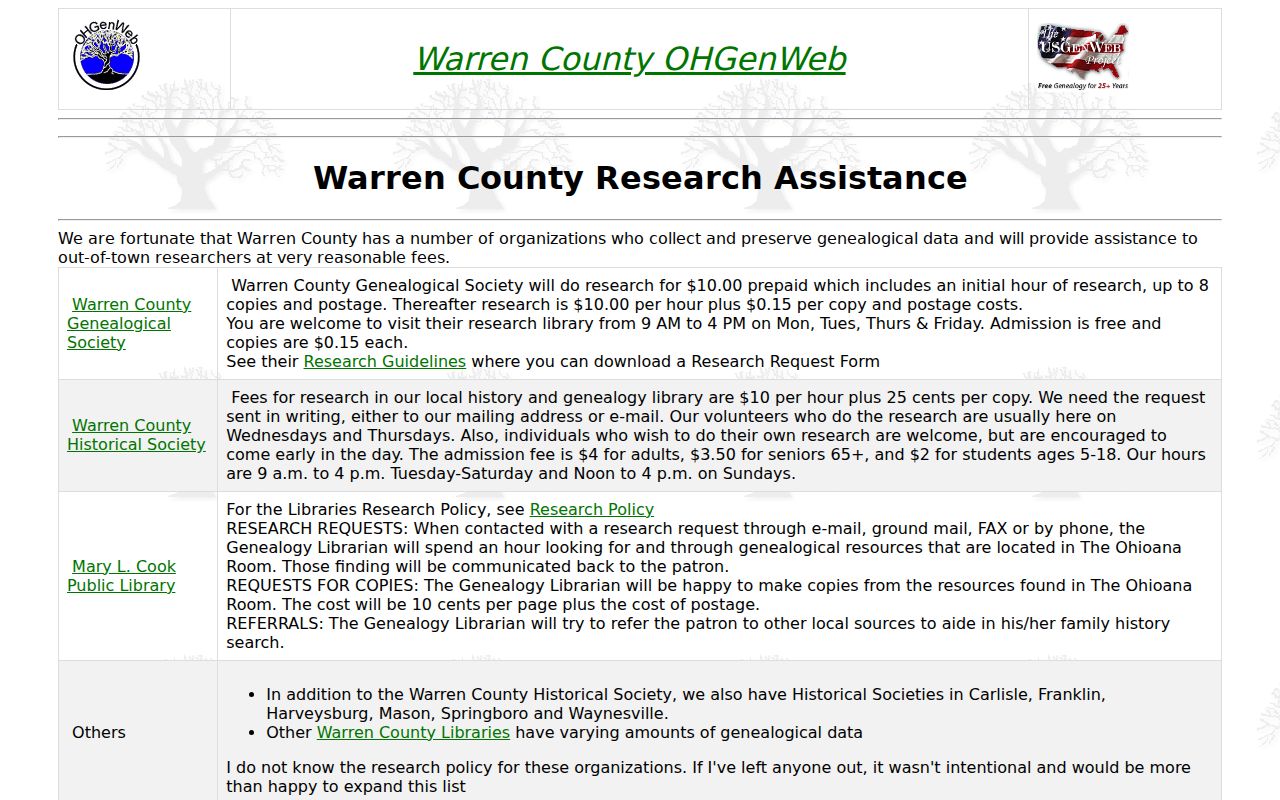
Use the displayed listing as a lead, then record the repository, page, and exact printed wording from the copy consulted.
Warren County Directory Archive Clues
The Warren County Records Center in Lebanon reports more than 20,000 cubic feet of climate-controlled county material and a reading room for paper, electronic, and microfilm research. Its collection begins as early as 1803 and includes records associated with the Auditor, Clerk and Common Pleas, Commissioners, Engineer, Probate, Recorder, Sheriff, and Treasurer. A directory listing can therefore become a better archive request when it supplies a year, place, occupation, or address.
Historical access follows the Center’s 75-year workflow, so an older question may be routed to archives instead of the office that handles a current record. The request path asks for party spelling, approximate date, township, office, record type, contact information, and mailing details. Add a directory citation or page number when known. An archival staff member has far more to work with than a broad request for every record under a surname.
Warren County Directory Research Hubs
The Warren County Genealogical Society maintains a public resource library at 406 Justice Drive and is a FamilySearch affiliate. Its online research route connects visitors with the Records Center, recorder deed images, historical-society material, newspapers, and wider databases. The society also identifies early marriage volumes, marriage consents, historic divorce material, cemetery resources, and family-history tools. Holdings, affiliate access, and hours can change, so call before travel.
The Klei Research Library at the Warren County Historical Society is a separate complement to WCGS. Its local holdings include newspapers, atlases, cemetery resources, photographs, church materials, court material, and collections related to Union Village Shakers and the National Normal University. The Society lists public research hours on Tuesday and Thursday, plus a paid staff-research option. A concise written inquiry should identify the subject, known facts, time period, requested record type, contact method, and dollar limit.
The Warren County Genealogical Society’s online research page is a useful way to connect the local collections before travel.
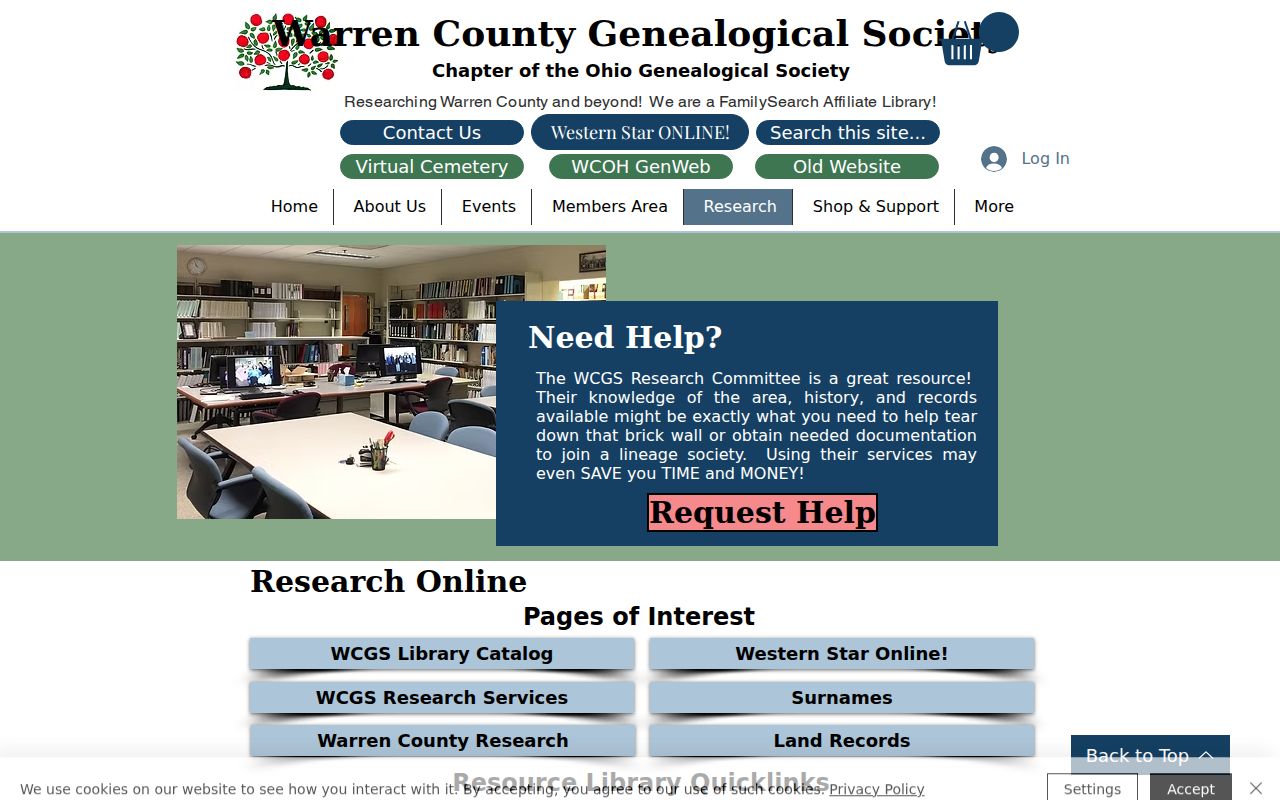
It reinforces that a directory lead may require a different local custodian for the supporting record.
The Warren County Genealogical Society library is another documented local starting point for directory research.
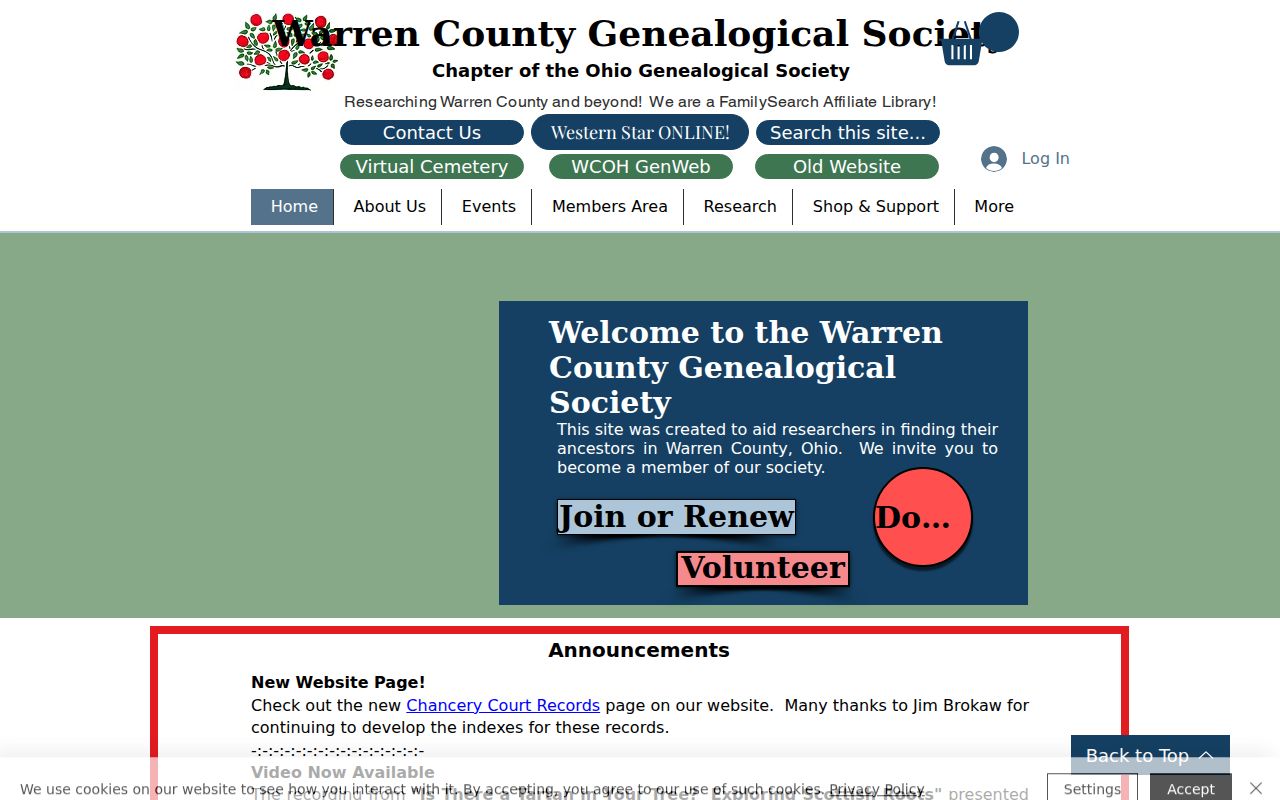
Its FamilySearch-affiliate role and local guides can help place a surname in the right record system without treating an index as final proof.
The Historical Society’s Klei Research Library page describes its local-history holdings and research procedure.

Its maps, newspapers, church material, and property-history collections can supply context around a dated directory listing.
Reading a Warren County Directory Entry
Read an old directory as a dated printed statement. An authentic entry normally gives a surname and given name, then a printed activity label, residence address or township, and sometimes a business address or widow or household notation. Transcribe what appears. Do not expand an abbreviation into a fact that the book does not say, and do not turn a residence line into proof that someone owned the premises or still lived there.
| Name | Copy the surname, given name, initials, and suffix exactly as printed. |
|---|---|
| Activity label | Record the trade, occupation, or business wording as printed, without adding a later meaning. |
| Residence or township | Keep the street, town, or township form used in that edition. |
| Business or household notation | Note it only when it appears, including any widow notation. |
| Source citation | Save the title, year, page, and repository with the transcription. |
- Criss-cross directory
- A directory organized by address or street rather than by name. No Warren County title or year was verified in this research.
- Householder index
- An index that groups a residence under a household head when the publication supplies that arrangement.
- Abbreviation key
- The volume’s own guide to shorthand. Photograph or copy it before interpreting an unfamiliar mark.
For example, a line that gives a name and a Main Street residence proves only the listing printed in that dated volume. The same person can have a similar name, a later move, or a different township record. Compare the printed line with a nearby census, newspaper notice, land record, probate file, or certificate as the question requires.
Western Star in Warren County Directory Gaps
When a directory year is unavailable, the WCGS Western Star project offers a large local discovery route. WCGS reports 178,510 digitized pages from 9,909 issues and free online access through Ohio Memory. Obituaries, legal notices, advertisements, club items, and property advertisements can help place a name or address in time. A result is a lead, not a substitute for the probate, land, court, or vital record it suggests.
Search title variants as well as a personal name. The historical research notes identify Western Star, Lebanon Gazette, Star & Gazette, Weekly Western Star, Lebanon Daily Star, Western Star and Lebanon Patriot among related titles that may need testing. Missing issues and title changes make a no-result search inconclusive. Keep the date, page, title, and the record path that follows from any useful notice.
The Western Star project documents the scale and access path for this Warren County historical source.
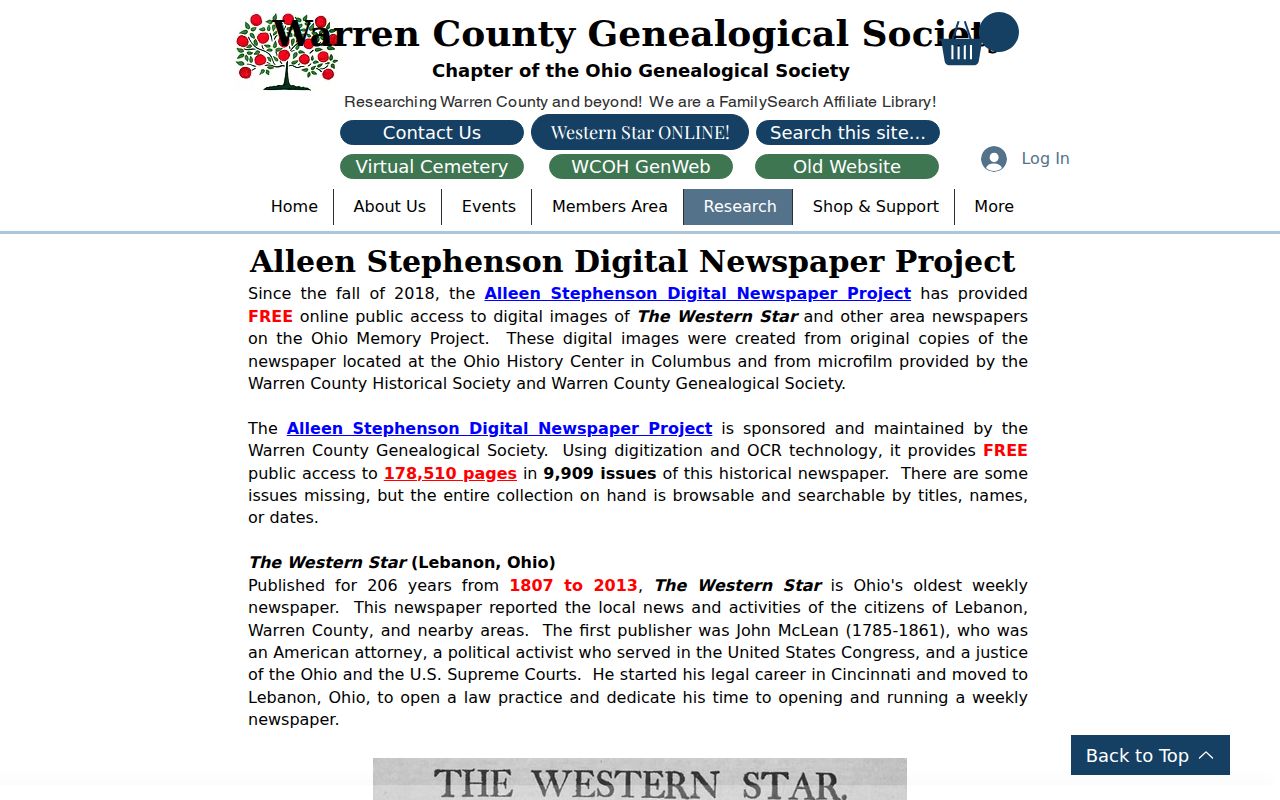
The collection helps fill a dated gap, but its incomplete run and OCR limitations mean each clue still needs a custodian record or another contemporary source.
Warren County Directory Sanborn Context
Sanborn maps place an old address or business within its built setting. The Warren County map guide identifies runs for Franklin, Lebanon, Mason, Morrow, and Waynesville. Lebanon editions are listed from 1885 through a 1923–1941 volume, and the Ohio Web Library provides a Lebanon 1890 example. Pair the closest dated map with a directory line to compare a street label, building footprint, or business use.
Map labels are historical observations, not proof of current ownership or present conditions. A number may have changed, a building may be gone, and a directory may name a street without a number. Keep the original locality and map year in the note. For a modern parcel trail after a historic address has been narrowed, use the Warren County street directory route rather than forcing an old map label into a current parcel result.
Tracing Warren County Families by Directory
Tracing a household works best as a dated sequence. Start with the latest permitted public anchor, such as a 1950 census household or a historic death index, and work toward the directory year. Names in nineteenth-century handwriting can vary, marriages can change a surname, and township labels can shift. Record conflicts instead of forcing two similar names into one identity.
- Find the documented directory entry and transcribe its name, place, printed address, activity label, year, and page.
- Search the Western Star by the name, town, relatives, and date range, while checking title variants when the first search is blank.
- Compare the nearest public census household, remembering that census schedules currently released run through 1950.
- Use a Sanborn edition or local map for the same town and period when a building or business location needs context.
- Follow a concrete event to the appropriate Recorder, Probate, court, vital, or Records Center source for confirmation.
A disappearance from a historical directory can mean a move, death, changed listing practice, a publication gap, or an unverified name variation. An obituary may lead to Probate, a land advertisement to the Recorder, and a social notice only to another search lead. When a historic listing needs a modern record check, a Warren County resident lookup should begin with the relevant official custodian and its date limits.
Warren County Directory Research Across Record Eras
Warren County was organized on March 24, 1803, the year Ohio became a state. Early work may be arranged by township or volume and may use land descriptions instead of a modern street address. The Recorder says deeds are indexed through 1797, reflecting pre-county land transactions in the Virginia Military District, Symmes Purchase, and Congress Lands. A historic legal description can therefore look unlike a modern lot number.
| 1797–1803 | Early land transactions and county formation call for recorded wording and historic land-system context. |
|---|---|
| Nineteenth century | Paper volumes and township or place references reward spelling variants, volume and page citations, and maps. |
| Early and mid twentieth century | Records Center, WCGS, Klei, newspapers, vital records, courts, and microfilm may each hold part of the trail. |
| 2001 onward | Centralized county records storage provides a route for historical county holdings. |
County preservation moved from paper volumes through microfilm, archival storage, and online systems. That progression does not make every old image equally available online. The Records Center, WCGS, and Klei remain the practical local network when a Warren County directory citation points beyond a web search.
Warren County Directory Limits
Historic directories are valuable because they bridge censuses and preserve details that may not appear elsewhere. They are not complete resident rolls. A directory may omit a township, a household, a year, or a type of listing. The online catalog gap is especially important in Warren County: no authoritative web catalog from this research verifies all directory publishers, year spans, reverse sections, or digitization status.
Use historical directory material for family history, old business and address context, estate questions, and local history. Do not use a historic listing to claim current physical presence or to harass anyone. Check the underlying office record when the question calls for legal, property, court, or vital confirmation.
Note: A dated listing is evidence of what the volume printed, not proof of present residence, ownership, relationship, or identity.